UI / UX Design
Curtain Call Project
Designed the Curtain Call brand concept and mobile app.
Year :
2025
Industry :
E-commerce
Client :
Curtain Call
Project Duration :
1 week
Problem :
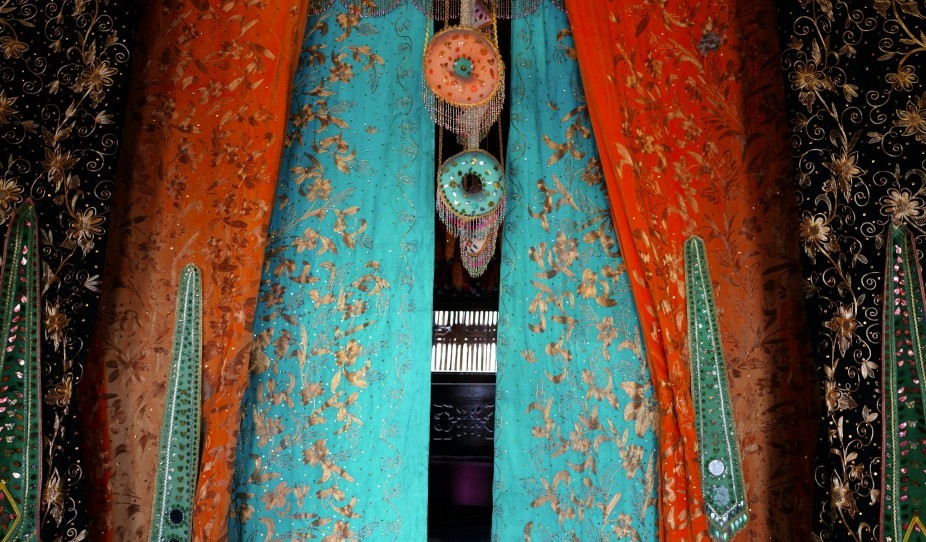
Living away from your homeland often comes with a quiet kind of sadness. You miss language, music, humour, gestures, and the feeling of being surrounded by people who “get it” without explanation. Cultural events exist, but they’re scattered, hard to find, and usually buried inside mainstream ticketing platforms that don’t reflect their emotional value.
I wanted to explore how design could support cultural belonging, not just event booking.
Curtain Call is about gathering, recognition, and shared joy through theatre.
People, Context, and Constraints:
Curtain Call is designed primarily for people living in the diaspora (immigrants, international students, and second-generation communities) who want to reconnect with culture through performance.
Some users actively seek events from their own culture. Others are curious and want to explore different traditions in a welcoming, non-intimidating way. Many attend events with friends or family, turning theatre into a social ritual rather than a solo activity.
The main constraints were emotional rather than technical. Cultural events carry meaning, memory, and identity. Presenting them in a generic ticketing layout risks flattening that richness. At the same time, the app needed to stay lightweight and enjoyable, not heavy, political, or educational in tone.
The challenge was to balance celebration over categorisation, and warmth over optimisation.
Design Approach:
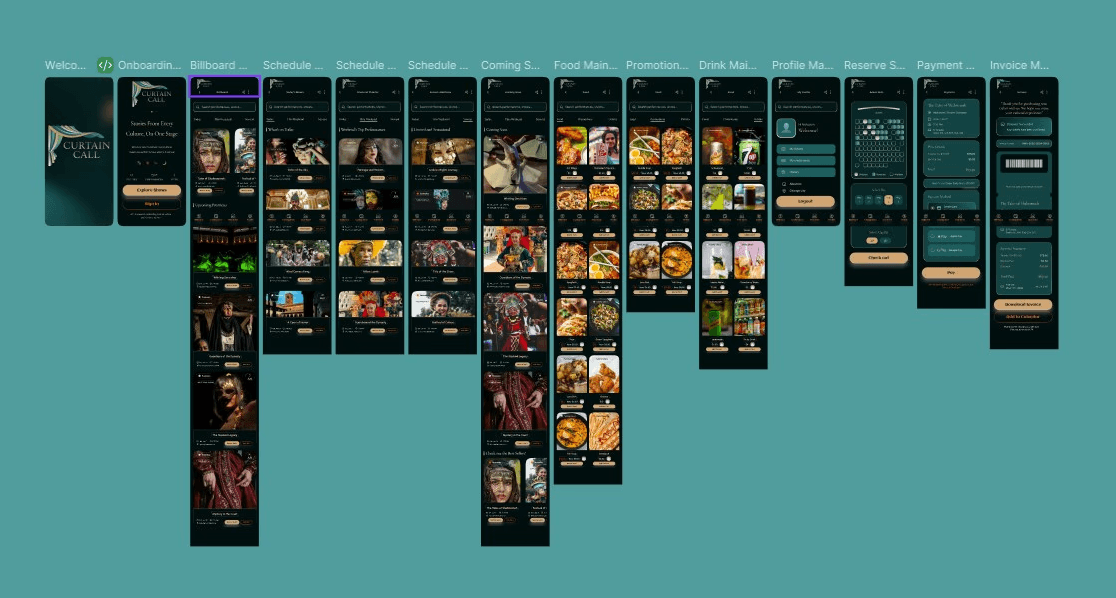
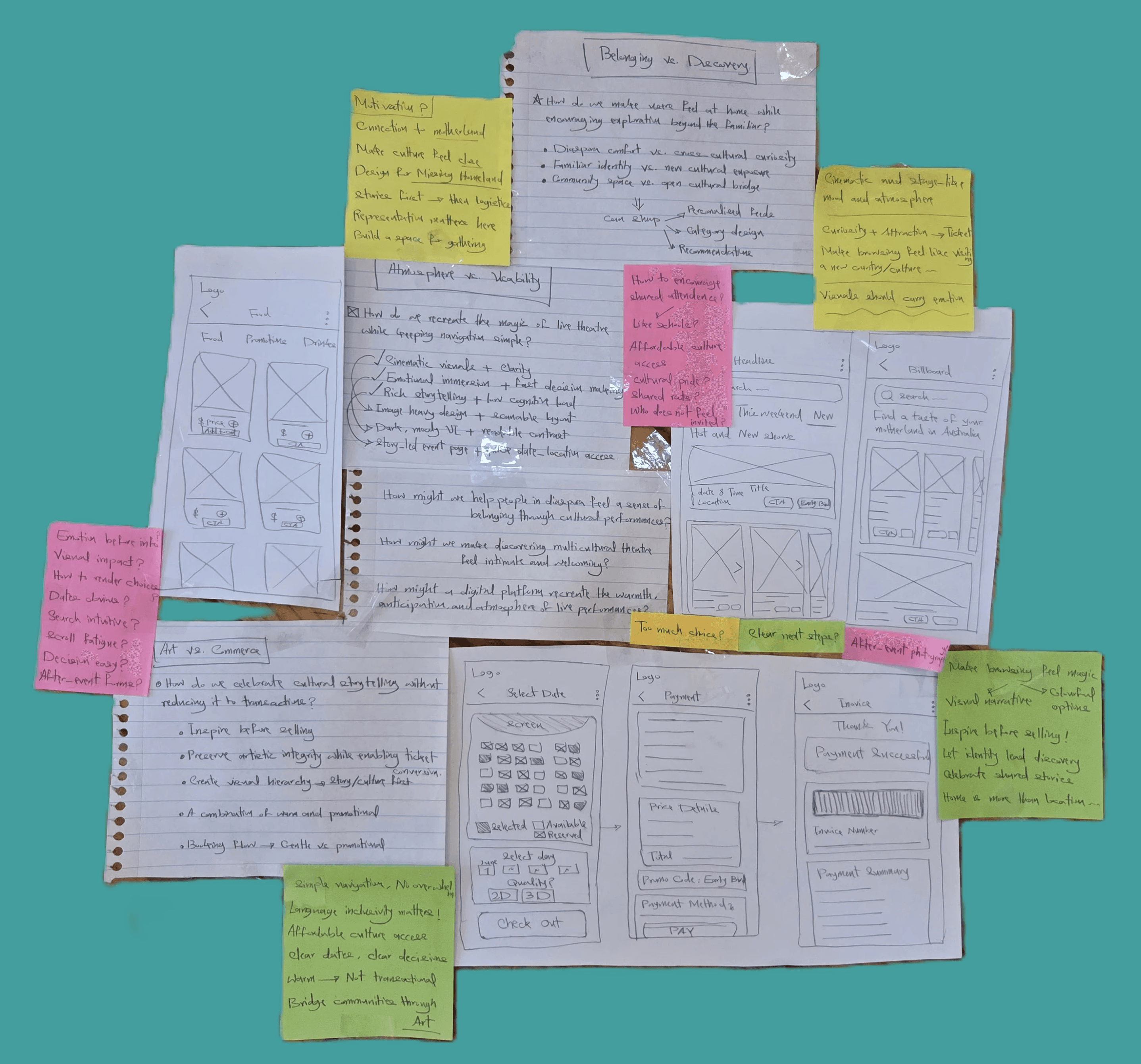
The design focuses on storytelling through layout, imagery, and language, rather than through complex features.
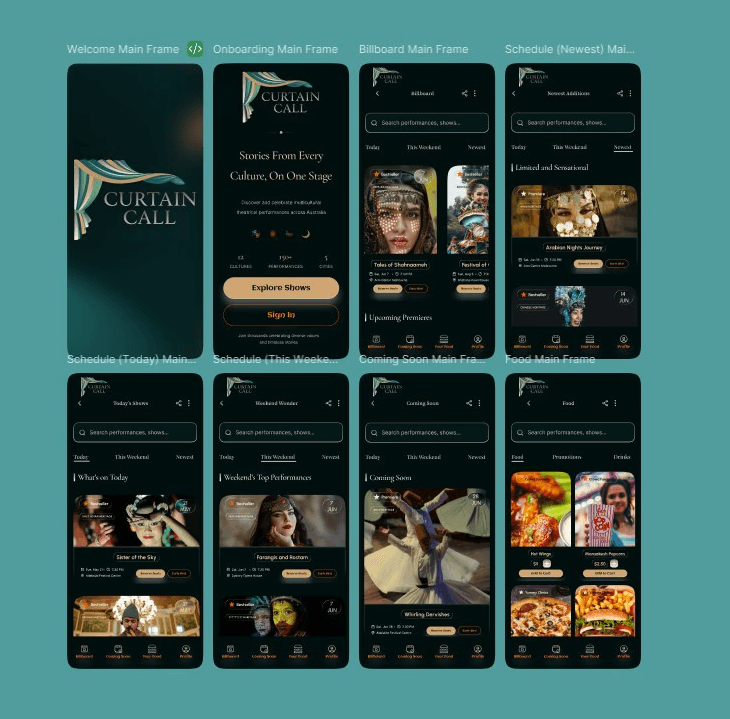
Instead of treating shows as inventory items, the UI gives space to visuals and titles that reflect the character of each performance. Browsing screens prioritise imagery, allowing users to connect emotionally before engaging with details like time, seat selection, or price.
The language throughout the app avoids transactional phrasing where possible. CTAs are simple and friendly, guiding users forward without urgency. The flow is intentionally straightforward, so the experience stays enjoyable and accessible, even for users who may not attend theatre frequently.
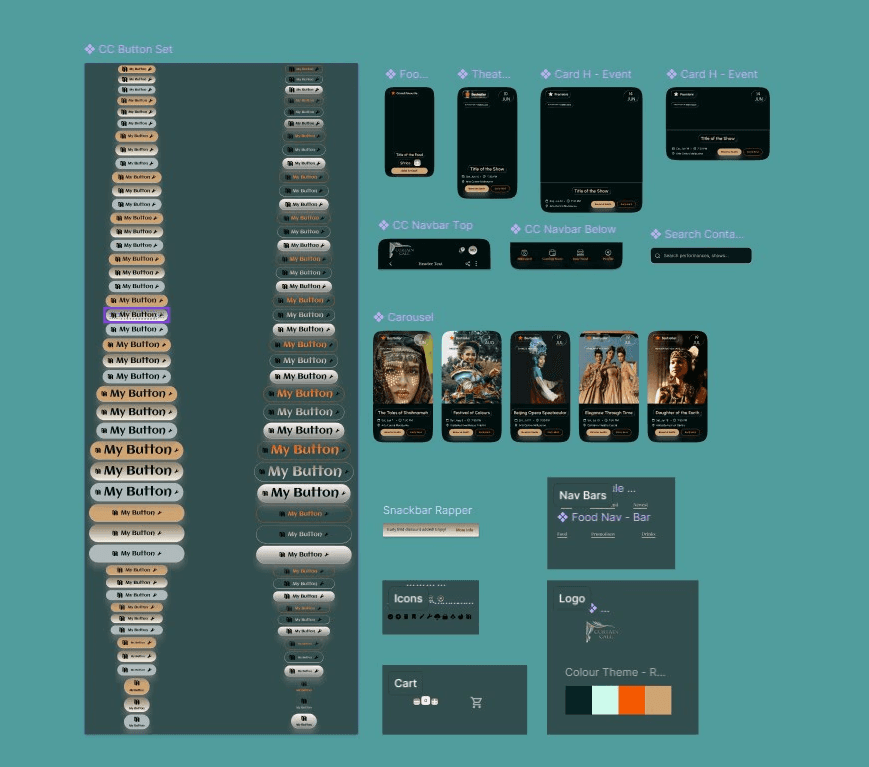
Dark backgrounds combined with warm accent colours were chosen to echo the atmosphere of live performance—stage lighting, evening events, and theatre interiors—while still keeping contrast high and interactions clear. This helps the app feel festive and inviting without becoming visually heavy.
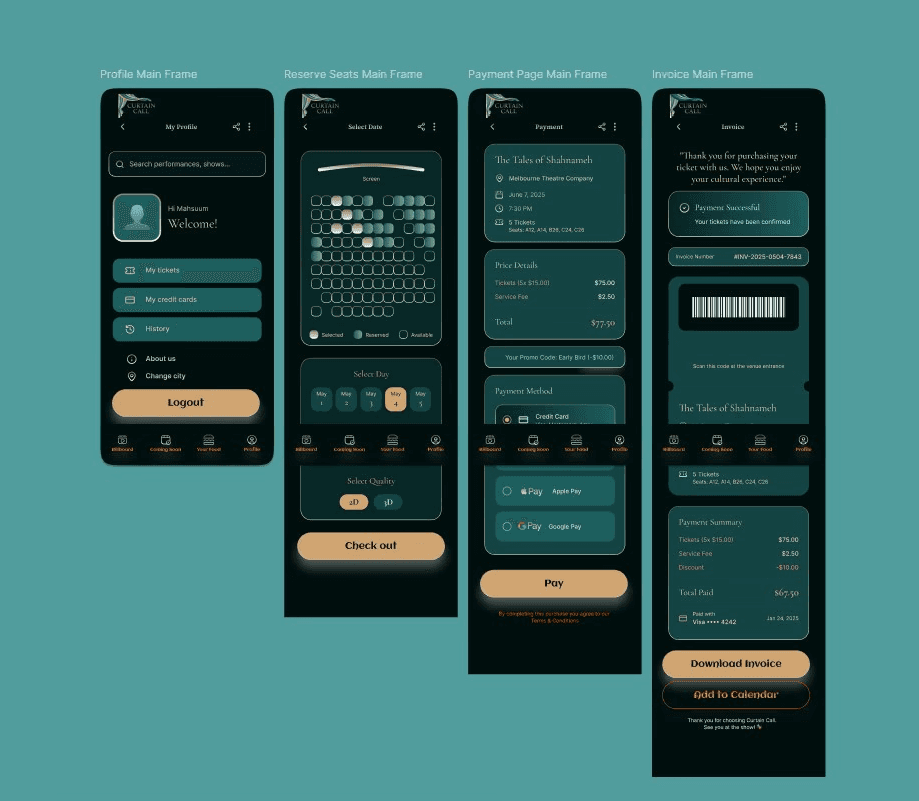
Seat selection, checkout, and invoice screens remain familiar and functional. I didn’t try to reinvent these steps; instead, I focused on maintaining consistency and clarity so the emotional tone established during discovery carries through to completion.
Summary & Reflection:
Curtain Call demonstrates how small design decisions—tone of language, image hierarchy, colour choices—can make a familiar flow feel more inclusive and culturally aware.
It’s not a complex system, and it wasn’t meant to be. The value of this project lies in showing how presentation and storytelling can change how people relate to a product, even when the underlying functionality is standard.
For me, this project was about balancing emotion with practicality: creating a space that feels welcoming and celebratory, while still being easy to use and understand.
More Projects


UI / UX Design
Curtain Call Project
Designed the Curtain Call brand concept and mobile app.
Year :
2025
Industry :
E-commerce
Client :
Curtain Call
Project Duration :
1 week
Problem :
Living away from your homeland often comes with a quiet kind of sadness. You miss language, music, humour, gestures, and the feeling of being surrounded by people who “get it” without explanation. Cultural events exist, but they’re scattered, hard to find, and usually buried inside mainstream ticketing platforms that don’t reflect their emotional value.
I wanted to explore how design could support cultural belonging, not just event booking.
Curtain Call is about gathering, recognition, and shared joy through theatre.
People, Context, and Constraints:
Curtain Call is designed primarily for people living in the diaspora (immigrants, international students, and second-generation communities) who want to reconnect with culture through performance.
Some users actively seek events from their own culture. Others are curious and want to explore different traditions in a welcoming, non-intimidating way. Many attend events with friends or family, turning theatre into a social ritual rather than a solo activity.
The main constraints were emotional rather than technical. Cultural events carry meaning, memory, and identity. Presenting them in a generic ticketing layout risks flattening that richness. At the same time, the app needed to stay lightweight and enjoyable, not heavy, political, or educational in tone.
The challenge was to balance celebration over categorisation, and warmth over optimisation.
Design Approach:
The design focuses on storytelling through layout, imagery, and language, rather than through complex features.
Instead of treating shows as inventory items, the UI gives space to visuals and titles that reflect the character of each performance. Browsing screens prioritise imagery, allowing users to connect emotionally before engaging with details like time, seat selection, or price.
The language throughout the app avoids transactional phrasing where possible. CTAs are simple and friendly, guiding users forward without urgency. The flow is intentionally straightforward, so the experience stays enjoyable and accessible, even for users who may not attend theatre frequently.
Dark backgrounds combined with warm accent colours were chosen to echo the atmosphere of live performance—stage lighting, evening events, and theatre interiors—while still keeping contrast high and interactions clear. This helps the app feel festive and inviting without becoming visually heavy.
Seat selection, checkout, and invoice screens remain familiar and functional. I didn’t try to reinvent these steps; instead, I focused on maintaining consistency and clarity so the emotional tone established during discovery carries through to completion.
Summary & Reflection:
Curtain Call demonstrates how small design decisions—tone of language, image hierarchy, colour choices—can make a familiar flow feel more inclusive and culturally aware.
It’s not a complex system, and it wasn’t meant to be. The value of this project lies in showing how presentation and storytelling can change how people relate to a product, even when the underlying functionality is standard.
For me, this project was about balancing emotion with practicality: creating a space that feels welcoming and celebratory, while still being easy to use and understand.
More Projects
UI / UX Design
Curtain Call Project
Designed the Curtain Call brand concept and mobile app.
Year :
2025
Industry :
E-commerce
Client :
Curtain Call
Project Duration :
1 week
Problem :
Living away from your homeland often comes with a quiet kind of sadness. You miss language, music, humour, gestures, and the feeling of being surrounded by people who “get it” without explanation. Cultural events exist, but they’re scattered, hard to find, and usually buried inside mainstream ticketing platforms that don’t reflect their emotional value.
I wanted to explore how design could support cultural belonging, not just event booking.
Curtain Call is about gathering, recognition, and shared joy through theatre.
People, Context, and Constraints:
Curtain Call is designed primarily for people living in the diaspora (immigrants, international students, and second-generation communities) who want to reconnect with culture through performance.
Some users actively seek events from their own culture. Others are curious and want to explore different traditions in a welcoming, non-intimidating way. Many attend events with friends or family, turning theatre into a social ritual rather than a solo activity.
The main constraints were emotional rather than technical. Cultural events carry meaning, memory, and identity. Presenting them in a generic ticketing layout risks flattening that richness. At the same time, the app needed to stay lightweight and enjoyable, not heavy, political, or educational in tone.
The challenge was to balance celebration over categorisation, and warmth over optimisation.
Design Approach:
The design focuses on storytelling through layout, imagery, and language, rather than through complex features.
Instead of treating shows as inventory items, the UI gives space to visuals and titles that reflect the character of each performance. Browsing screens prioritise imagery, allowing users to connect emotionally before engaging with details like time, seat selection, or price.
The language throughout the app avoids transactional phrasing where possible. CTAs are simple and friendly, guiding users forward without urgency. The flow is intentionally straightforward, so the experience stays enjoyable and accessible, even for users who may not attend theatre frequently.
Dark backgrounds combined with warm accent colours were chosen to echo the atmosphere of live performance—stage lighting, evening events, and theatre interiors—while still keeping contrast high and interactions clear. This helps the app feel festive and inviting without becoming visually heavy.
Seat selection, checkout, and invoice screens remain familiar and functional. I didn’t try to reinvent these steps; instead, I focused on maintaining consistency and clarity so the emotional tone established during discovery carries through to completion.
Summary & Reflection:
Curtain Call demonstrates how small design decisions—tone of language, image hierarchy, colour choices—can make a familiar flow feel more inclusive and culturally aware.
It’s not a complex system, and it wasn’t meant to be. The value of this project lies in showing how presentation and storytelling can change how people relate to a product, even when the underlying functionality is standard.
For me, this project was about balancing emotion with practicality: creating a space that feels welcoming and celebratory, while still being easy to use and understand.